Traveling by air with your dog can be a memorable adventure or a stressful ordeal. Success depends on careful planning, understanding airline policies, and preparing your dog for the journey. Many dog owners are surprised to discover the number of steps and important details involved.
Flying with a dog is not just about buying a ticket and showing up at the airport. It’s about ensuring your dog’s comfort, safety, and well-being from start to finish. This guide will walk you through every step, giving you clear advice, practical tips, and real-world examples so your trip goes as smoothly as possible.
Understanding Airline Policies For Dogs
Every airline has different rules about flying with dogs. Some allow pets in the cabin, others in the cargo hold, and a few may not accept dogs at all. Before you book a flight, research the airline’s pet policy on their website or call customer service. Key factors include:
- Dog size and breed: Most airlines allow only small dogs (usually under 8 kg or 17 lbs) in the cabin. Larger dogs travel in the cargo hold.
- Carrier requirements: Airlines have strict rules about carrier size, material, and ventilation.
- Health and documentation: Proof of vaccination and a health certificate from your vet are usually required.
- Fees: Pet fees vary widely, ranging from $50 to $250 per flight.
If you have a snub-nosed breed like a pug or bulldog, be extra cautious. Many airlines restrict these dogs because they can have breathing problems at high altitudes. Always check the most up-to-date airline rules, as they change frequently.
Comparing Major Airlines’ Pet Policies
Here’s a quick side-by-side look at some popular airlines and their pet policies.
| Airline | Cabin Pet Limit | Max Weight (Cabin) | Pet Fee (Cabin) | Cargo Pets |
|---|---|---|---|---|
| Delta | 1 per passenger | 8 kg (17 lbs) | $125 | Yes |
| United | 1 per passenger | 8 kg (17 lbs) | $125 | Yes |
| Southwest | 1 per passenger | 8 kg (17 lbs) | $95 | No |
| Air France | 1 per passenger | 8 kg (17 lbs) | €125 | Yes |
Non-obvious insight: Some airlines limit the number of pets per flight, not just per passenger. Book early, especially for international flights.
Preparing Your Dog For Air Travel
Preparation is the most important part of flying with a dog. Begin weeks in advance, not days.
- Visit the vet: Get a full check-up. Ask for a health certificate dated within 10 days of your flight. Update all vaccinations, especially rabies.
- Microchip and tags: Make sure your dog has a microchip with up-to-date contact information. Attach an ID tag to the collar with your name, phone, and destination address.
- Practice with the carrier: Leave the travel carrier open at home with your dog’s favorite blanket and toy. Let your dog spend time inside to get comfortable.
- Crate training: If your dog isn’t used to a crate, start training early. Feed meals inside and reward calm behavior.
- Exercise: On travel day, give your dog a long walk or play session to reduce anxiety and restlessness.
Important: Do not feed your dog a big meal right before flying. A small snack 4-6 hours before the flight is enough. This reduces the risk of nausea or accidents.
Choosing The Right Carrier
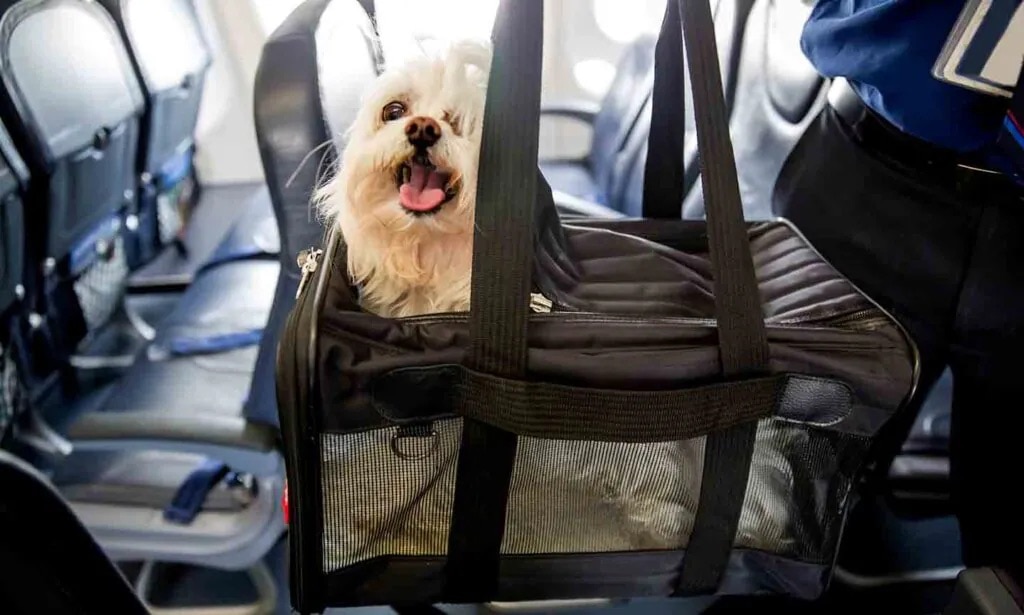
Selecting the correct carrier is critical for your dog’s comfort and the airline’s requirements. A carrier that is too small, too large, or poorly ventilated can cause stress or even health risks.
What To Look For In A Dog Carrier
- Size: Your dog should be able to stand, turn around, and lie down comfortably.
- Material: Soft-sided carriers are preferred in-cabin, but hard-sided are required for cargo.
- Ventilation: Mesh panels on at least two sides are essential.
- Leak-proof bottom: Prevents messes and keeps your dog dry.
- Secure fasteners: Zippers or latches should stay closed, even with movement.
- Comfort: Add a familiar blanket or pad to reduce stress.
Carrier Size Comparison
Here’s how different carrier sizes work for different dog weights.
| Carrier Size | Dog Weight | Dimensions (LxWxH) |
|---|---|---|
| Small | Up to 7 kg (15 lbs) | 40 x 25 x 23 cm |
| Medium | 7-11 kg (15-25 lbs) | 55 x 35 x 30 cm |
| Large (Cargo only) | 12-25 kg (26-55 lbs) | 80 x 55 x 55 cm |
Non-obvious insight: Airline staff may refuse boarding if your carrier is even 1 cm too large. Double-check measurements before arriving at the airport.
Booking Your Flight
The timing of your flight can have a big effect on your dog’s experience. Here are the most important factors:
- Direct flights: Avoid layovers. The fewer stops, the less stress for your dog.
- Time of day: Early morning or late evening flights are best, especially in summer. Temperatures are cooler and airports are less crowded.
- Notify the airline: Always call the airline after booking to confirm your dog’s spot. Some airlines have a limit on pets per flight.
Tip: If you’re flying internationally, check the pet entry requirements for your destination country. Some countries require quarantine, special vaccines, or advance paperwork.
Packing Essentials For Your Dog
Don’t assume the airline will provide anything for your dog. Pack a dedicated travel bag with:
- Food and water: Bring enough for the trip and a little extra in case of delays.
- Collapsible bowls: Light and easy to pack.
- Favorite toy: Reduces anxiety during travel.
- Waste bags and wipes: For quick clean-ups.
- Leash and harness: Some airports require dogs to be leashed outside the carrier.
- Health certificate and vaccine records: Keep these handy for check-in and customs.
Practical example: Some airports have pet relief areas. Know where these are in advance, as you’ll need to use them before security and after landing.
On The Day Of The Flight
Travel day can be hectic for both you and your dog. Stay calm and follow these steps:
- Arrive early: Give yourself extra time for check-in and security. With a pet, everything takes longer.
- Pre-flight exercise: Let your dog walk, sniff, and relieve itself before entering the airport.
- Feed lightly: Offer a small meal at least 4 hours before the flight. Too much food can cause upset stomachs.
- Check the carrier: Make sure all zippers and doors are secure. Line the bottom with an absorbent pad.
- Carry documents: Keep all paperwork in a folder for easy access.
Common mistake: Forgetting to give your dog a chance to relieve itself before check-in. Once inside security, options are limited.
Navigating Airport Security
Security can be stressful for dogs. Here’s what to expect:
- In-cabin pets: You will carry your dog through the metal detector while the carrier goes through the X-ray machine.
- Cargo pets: After check-in, airline staff will take your dog to a special holding area. Say goodbye calmly.
- TSA rules: Remove your dog’s leash and collar before security. Hold your dog securely or use a slip lead after passing through.
Practical advice: Keep treats in your pocket to reward calm behavior during security.
In-flight Comfort And Safety
Once on the plane, your dog’s comfort is your top priority.
- In-cabin dogs: The carrier must stay under the seat in front of you. Do not open the carrier during the flight.
- Cargo dogs: Trust the airline staff, but request a “Live Animal” sticker and ask to be notified when your dog is loaded.
- Monitor temperature: Some planes can get cold near the floor. Add an extra blanket if needed.
- Avoid sedatives: Unless prescribed by your vet, do not sedate your dog. Sedation can be dangerous at high altitude.
Pro insight: Dogs can pick up on your stress. Stay calm and speak softly if your dog seems anxious.
Credit: www.businessinsider.com
Arrival And Customs Procedures
Landing is not the end of your journey. Most countries have specific entry requirements for dogs.
- Collect your dog: For in-cabin pets, wait until the seatbelt sign goes off. For cargo pets, ask where to pick up your dog (often at a special cargo area).
- Health inspection: Customs may require you to show health documents or proof of vaccination.
- Quarantine: Some countries, like Australia and the UK, have strict quarantine rules. Check these far in advance.
Example: In the United States, you must present a valid rabies certificate for your dog to enter. In Japan, dogs may face up to 6 months of quarantine if paperwork is missing.
Special Considerations For International Flights
Flying abroad with a dog is more complex than domestic travel.
- Microchip: Many countries require an ISO 11784/11785 microchip.
- Import permit: Some countries ask for a pet import permit, applied for weeks before travel.
- Rabies titer test: In some places, you must show proof of rabies antibodies, done months before the flight.
- Language barrier: Carry translated documents if your destination’s language is different.
Extra detail: Some countries only allow pet entry at specific airports with animal inspection stations. Plan your route accordingly.
Credit: www.chewy.com
What To Do If Your Dog Flies In Cargo
For large dogs, cargo travel is often the only option. This can worry many owners, but safe cargo travel is possible with the right steps.
- Book with a pet-friendly airline: Some carriers have special pet programs (like Delta’s “Pet First”).
- Direct flights only: Avoid connections to reduce handling and risk.
- Label everything: Write your contact info on the crate in large letters.
- Water and food bowls: Attach these to the inside of the crate door. Freeze water so it melts slowly during the flight.
- No leashes or collars inside: These can get caught and cause injury.
Cargo Vs Cabin: Key Differences
Here’s a quick look at the main differences between cargo and cabin travel for dogs.
| Aspect | Cabin | Cargo |
|---|---|---|
| Dog Size | Small only | Medium to large |
| Owner Proximity | With you | Separate area |
| Temperature Control | Stable | Depends on airline/plane |
| Check-in Time | Standard | Earlier required |
| Stress Level | Usually lower | May be higher |
Non-obvious insight: Not all cargo holds are temperature-controlled. Ask the airline specifically about their pet cargo area.
Tips For Reducing Your Dog’s Stress
Flying is not natural for dogs. Here’s how to make it less scary:
- Familiar items: Put a worn t-shirt with your scent in the carrier.
- Natural calmers: Some dogs respond well to calming sprays or pheromone collars.
- Practice separation: If your dog is clingy, practice short separations in advance.
- Desensitize to noise: Play airport or airplane sounds at home to reduce fear of new noises.
- Reward calmness: Use treats to reinforce relaxed behavior before, during, and after the flight.
Mistake to avoid: Don’t scold a barking or whining dog in the airport. Calmly redirect with a treat or toy instead.
Common Mistakes To Avoid
Even experienced travelers make errors. Some common pitfalls include:
- Booking last minute: Pet spots can fill up weeks in advance.
- Assuming all airlines accept dogs: Not every airline or every plane type allows pets.
- Ignoring breed restrictions: Many airlines ban brachycephalic breeds or very large dogs.
- Forgetting health paperwork: Missing documents can mean your dog is denied boarding or entry.
- Failing to check local laws: Some destinations have breed bans or special rules.
Real-world example: A traveler once arrived in Hawaii without the right paperwork. The dog was quarantined for 120 days, costing thousands of dollars.
Health And Safety Concerns
Your dog’s health must come first. Flying can cause dehydration, anxiety, or even heatstroke if not handled correctly.
- Hydration: Offer water before and after the flight, but not so much that your dog needs to urinate urgently.
- Temperature: Avoid flying in extreme heat or cold, especially for cargo dogs.
- Medication: Discuss any medications with your vet. Only give prescribed medicine.
- Older dogs: Senior dogs or those with medical conditions may not be good candidates for air travel.
Pro tip: If your dog shows signs of distress (panting, drooling, shaking), consult a vet before the next flight.

Credit: animalsmatter.com
When Not To Fly With Your Dog
Sometimes, air travel is too risky for your pet. Consider other options if:
- Your dog is very old, young (under 8 weeks), or has health issues.
- Your dog is pregnant or has chronic breathing problems.
- Your dog is extremely anxious, even with training.
- The journey is short and driving is possible.
Alternatives: Consider boarding, a pet-sitter, or ground transport services if flying is not safe.
Special Situations: Service And Emotional Support Dogs
Rules for service animals and emotional support animals (ESAs) are different from those for pets.
- Service dogs: Most airlines allow trained service dogs in the cabin for free, with proper paperwork.
- ESAs: Many airlines no longer allow ESAs in the cabin; check current rules.
- Advance notice: Always notify the airline and provide documents early.
Useful link: For the most current rules on service animals, visit the U.S. Department of Transportation.
After The Flight: Helping Your Dog Adjust
Once you’ve landed, your dog might be tired, anxious, or confused.
- Offer water and a bathroom break as soon as possible.
- Give your dog time to adjust to the new environment before exploring.
- Watch for signs of stress such as hiding, shaking, or not eating.
- Stick to routines: Feed and walk at familiar times to help your dog settle in.
Non-obvious insight: Some dogs may develop travel anxiety after a stressful flight. Use positive reinforcement to rebuild confidence.
Frequently Asked Questions
How Much Does It Cost To Fly With A Dog?
Costs vary by airline, size, and destination. In-cabin pet fees range from $50 to $250 one-way. Cargo travel is more expensive, often $200 to $600 depending on the dog’s size and route.
Can My Dog Sit On My Lap During The Flight?
No. All airlines require that dogs remain inside an approved carrier under the seat in front of you for the entire flight. Only official service animals are allowed out, and they must remain at your feet.
What Documents Do I Need To Fly With My Dog?
You need a current health certificate from your vet, proof of rabies vaccination, and sometimes an import permit for international flights. Always check the requirements of your airline and destination country.
Are There Breed Restrictions For Flying With Dogs?
Yes. Many airlines do not allow snub-nosed breeds (like pugs or bulldogs) or very large breeds. Always check with your airline before booking.
What Should I Do If My Dog Gets Anxious During The Flight?
Stay calm and speak softly to your dog. Do not remove your dog from the carrier. Use familiar items and treats to comfort your dog. If severe anxiety is a concern, consult your vet about safe options before travel.
Flying with your dog takes careful preparation, but with the right steps, you can both arrive safely and happily at your destination. Plan ahead, know the rules, and always put your dog’s comfort and safety first.