Dog owners want to keep their pets safe. Sometimes, a simple collar is not enough. Dogs can escape, get lost, or chase after something exciting. In these moments, a dog GPS tracker can be a lifesaver. These small devices help you know where your dog is, even when you cannot see them. But how do these trackers really work? This guide explains everything in simple English. You will learn the technology behind GPS trackers, how they send signals, what features matter, and how to use them well. If you are thinking about buying one, or just want to understand the science, you are in the right place.
What Is A Dog Gps Tracker?
A dog GPS tracker is a small device that attaches to your dog’s collar. Its main job is to show you your dog’s location in real time. GPS stands for Global Positioning System. This system uses satellites in space to find the position of the tracker on Earth. When your dog wears a GPS tracker, you can see where they are using an app on your phone or computer.
There are many types of dog trackers. Some use only GPS, while others combine GPS with Bluetooth or radio signals. The main goal is always the same: to help you find your dog quickly and easily. Some trackers are very simple, while others have extra features like activity monitoring or health data.
The Core Technology: How Gps Works
To understand dog GPS trackers, you need to know the basics of how GPS works. GPS is a global system managed by the United States. It has a network of about 30 satellites that orbit the Earth. Each satellite sends out signals with its location and the time.
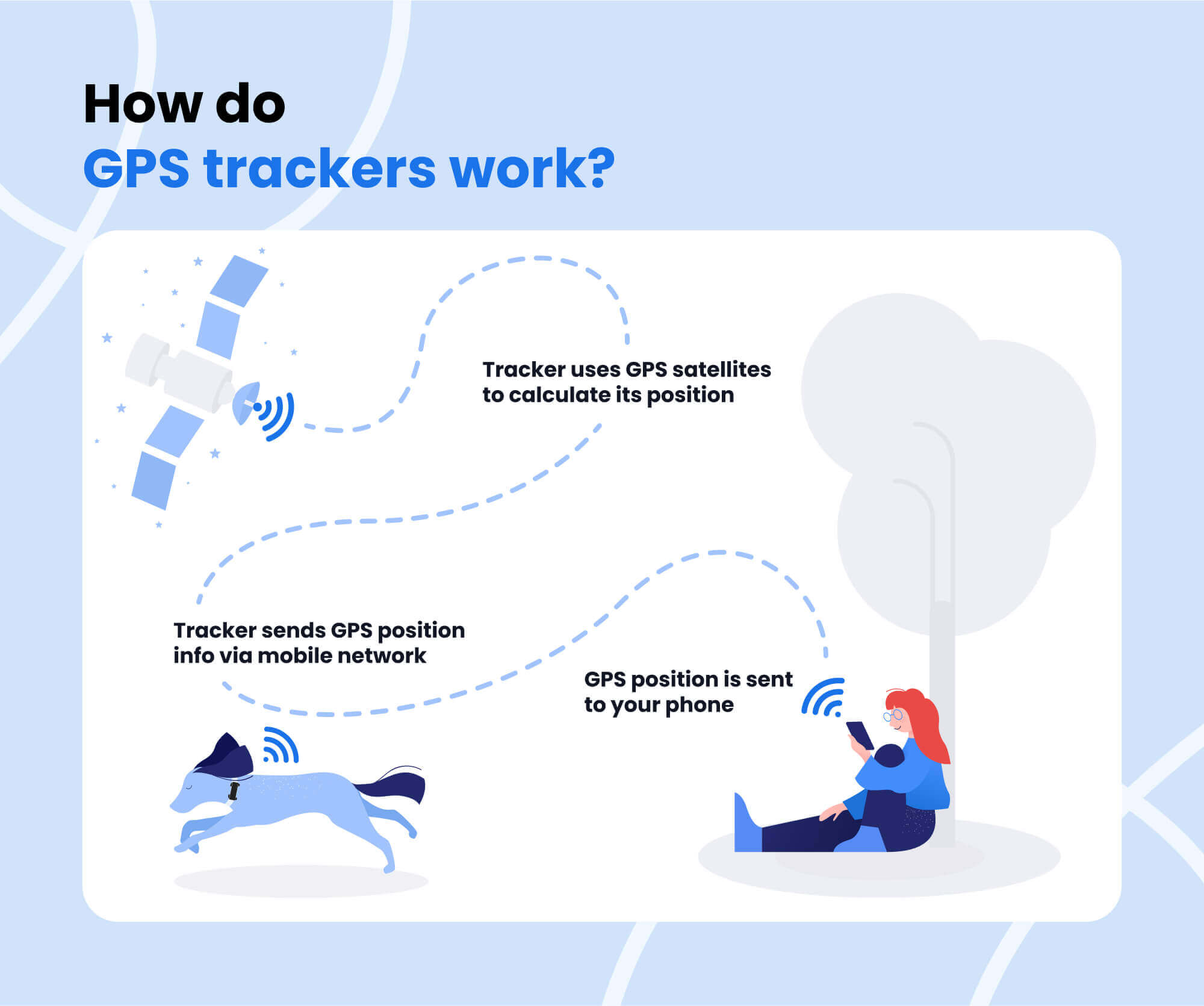
A GPS tracker in your dog’s collar receives signals from several satellites at once. By measuring how long these signals take to reach the device, it can calculate its exact position on the planet. Most GPS trackers need signals from at least four satellites to work well.
When the tracker knows its position, it sends this information to your phone or computer. This process is called location reporting. It can happen in different ways, depending on the type of tracker.
How Gps Data Reaches You
The tracker finds its position using satellites. But how does this data reach you? There are three main ways:
- Cellular Network (SIM Card)
- Radio Frequency (RF)
- Bluetooth
1. Cellular Network
Most modern dog GPS trackers use a cellular connection. The device has a small SIM card, like a smartphone. It uses mobile networks (like 3G, 4G, or LTE) to send the location data to a server. You access this server with an app or website.
This method works almost anywhere you have mobile coverage.
2. Radio Frequency
Some trackers use radio signals instead of mobile data. These are often called RF trackers. They send the location to a special receiver you keep with you. RF trackers usually have a shorter range (often less than 3 miles), but do not need a mobile network.
3. Bluetooth
A few trackers use Bluetooth. These work only when your phone is close to your dog (usually less than 100 meters). Bluetooth trackers are more for finding your dog in the house or yard, not for long distances.
A Simple Example
Imagine you are walking your dog in a park. Your dog runs off and disappears. With a GPS tracker, you open your phone app. The app shows a map with your dog’s location marked. You follow the map, and soon you find your dog safe and happy.
All this happens because the tracker uses satellites, sends data with a SIM card, and your phone receives the information in real time.
Main Parts Of A Dog Gps Tracker
Every dog GPS tracker has a few key parts. These parts work together to help you find your dog.
- GPS Receiver: Picks up signals from satellites to find the device’s location.
- Microprocessor: The “brain” of the tracker. It processes the data.
- Communication Module: Sends location data to your phone. This can be cellular, RF, or Bluetooth.
- Battery: Powers the device. Some batteries last a few days, others a few weeks.
- Antenna: Helps the device send and receive signals.
- Enclosure: A waterproof and strong case to protect the electronics.
Some models add extra sensors for health or activity data. But every tracker must have these main parts.
How Tracking And Location Updates Work
Not all GPS trackers update location at the same speed. Some send updates every few seconds. Others do it every minute or longer. This is called the update interval. Shorter intervals mean you get more accurate information, but the battery drains faster.
Some trackers let you change the interval in the app. For example, you can set it to update every 10 seconds when your dog is lost, and every 5 minutes during normal walks.
Real-time Tracking Vs. Passive Tracking
- Real-Time Tracking: The tracker sends location updates as they happen. You can see your dog’s movement live.
- Passive Tracking: The tracker records your dog’s location, but you see it later. This is less common in pet devices.
Most pet owners want real-time tracking. It helps you react quickly if your dog runs away.
Step-by-step: What Happens When Your Dog Runs Off
Here’s what happens inside a GPS tracker if your dog escapes:
- The GPS receiver connects to satellites and finds the location.
- The microprocessor processes this data.
- The communication module sends the location to a server (using cellular or RF).
- You open the app on your phone.
- The app asks the server for your dog’s latest location.
- The app shows your dog’s position on a map.
- As your dog moves, the tracker keeps sending new locations.
This process repeats every few seconds or minutes, depending on your settings.
Types Of Dog Gps Trackers
There are several types of dog GPS trackers, each with strengths and weaknesses. Let’s compare the main types in a simple way:
| Type | Range | Needs Mobile Signal? | Battery Life | Best Use |
|---|---|---|---|---|
| GPS + Cellular | Unlimited (where there is signal) | Yes | 1-7 days | Urban, suburban, travel |
| GPS + RF | Up to 3 miles | No | Up to 30 days | Hiking, rural |
| Bluetooth Only | Up to 100 meters | No | Up to 1 year | Indoors, small yards |
GPS + Cellular trackers are the most popular. They work almost everywhere, but need a subscription for mobile data. GPS + RF trackers are good for remote areas. Bluetooth trackers are not true GPS, but help you find your dog nearby.
How Accurate Are Dog Gps Trackers?
GPS is a powerful technology, but it is not perfect. The accuracy of a dog GPS tracker depends on a few things:
- Number of satellites the device can see
- Weather and sky visibility (open sky is better)
- Quality of the GPS chip in the device
- Mobile network delays (for cellular trackers)
Most dog GPS trackers are accurate within 5 to 20 meters under good conditions. In heavy forests or cities with tall buildings, accuracy can drop.
Practical Example
If your dog is in an open field, a good GPS tracker will usually show their location within about two car lengths. If they are in a dense forest, the signal may “bounce” and be less accurate.
Features And Extras In Modern Dog Gps Trackers
Many GPS trackers offer more than just location. Here are some popular features:
- Activity Monitoring: Counts your dog’s steps and movement. Helps you track exercise.
- Virtual Fences (Geo-fencing): You set a “safe zone” on the map. If your dog leaves this area, you get an alert.
- Location History: See where your dog has been over the past hours or days.
- Water Resistance: Protects the device from rain or swimming.
- LED Lights or Sound: Helps you find your dog in the dark.
- Temperature Alerts: Warns you if your dog is too hot or cold.
- Multiple Pet Tracking: Track several dogs at once in the same app.
Some trackers also work with health apps or let you share your dog’s location with friends or family.
How To Set Up And Use A Dog Gps Tracker
Getting started is simple, but there are a few steps to follow for best results.
Step 1: Charge The Device
Most trackers arrive with an empty battery. Fully charge it before first use. Charging can take from 1 to 3 hours.
Step 2: Install The App
Download the app for your tracker on your smartphone or tablet. Most brands support both iOS and Android.
Step 3: Register And Connect
Create an account in the app. Pair the tracker with your app, usually by scanning a QR code or entering a serial number.
Step 4: Attach To Collar
Secure the tracker firmly to your dog’s collar. Make sure it is not too tight or too loose.
Step 5: Set Up Features
- Test live tracking to see how it works.
- Set a safe zone if your tracker supports geo-fencing.
- Explore other features, such as activity tracking or alerts.
Step 6: Go For A Test Walk
Take your dog for a short walk. Watch the app and see how location updates work. This helps you learn the system before you need it in an emergency.
Subscription Fees And Costs
Most GPS trackers that use cellular networks need a monthly or yearly subscription. This covers the cost of mobile data. Prices vary, but most are between $5 to $10 per month. Some brands offer discounts for paying a year in advance.
RF and Bluetooth trackers often have no subscription fees, but may cost more up front.
Battery Life: What To Expect
Battery life depends on the type of tracker, how often it updates location, and whether it has extra features. Here is a simple comparison:
| Tracker Type | Typical Battery Life | Update Interval |
|---|---|---|
| GPS + Cellular | 1-7 days | Every 2-60 sec |
| GPS + RF | 7-30 days | Every 10-60 sec |
| Bluetooth Only | Up to 1 year | On demand |
If you use real-time tracking often, the battery will drain faster. Some trackers have “power-saving” modes for longer life.
Pros And Cons Of Dog Gps Trackers
Like any technology, GPS trackers have strengths and weaknesses. Here is a clear look:
Pros
- Peace of mind for owners
- Find lost dogs quickly
- Real-time location updates
- Useful for travel or walks in new places
- Some models offer health and activity data
Cons
- Needs regular charging
- Monthly fees (for cellular models)
- Location may not be perfect in all areas
- Some devices are bulky for small dogs
- RF models have limited range
A non-obvious tip: Battery life often drops in cold weather, and some dogs dislike wearing heavy trackers. Try to pick a model that matches your dog’s size and your climate.
Credit: www.petlink.net
Using Geo-fences And Safe Zones
A smart feature in many GPS trackers is the geo-fence or safe zone. You can draw a circle or shape on the app’s map. If your dog leaves this area, you get an instant alert.
This is helpful if your dog likes to explore or if you have a big yard with an open gate. Some advanced trackers let you set multiple safe zones, or different zones for different times (for example, home and dog park).
How To Use Geo-fences Well
- Set the safe zone a little bigger than your yard, so you do not get false alerts.
- Test the alert with your dog on a leash first.
- Update the zone if you move or travel.
Geo-fencing can help prevent escapes before they happen.
Common Mistakes When Using Dog Gps Trackers
Many new users make the same errors. Avoid these common mistakes:
- Forgetting to charge the device. If the battery is dead, the tracker cannot work.
- Using the wrong collar size. A loose device can fall off, and a tight one can bother your dog.
- Not checking mobile coverage. Some areas have weak signal, which means slow or no updates.
- Ignoring software updates. Apps and devices often get better with updates. Install them when offered.
- Trusting the tracker 100%. Technology can fail. Always use a tag with your phone number as backup.
A smart tip: Practice with your dog in a safe place before you rely on the GPS tracker outdoors.
Safety And Privacy Concerns
Dog GPS trackers use your location and your dog’s location. Most brands protect your data with encryption, but you should still be careful.
- Use strong passwords for your tracker app.
- Only share your dog’s location with trusted people.
- If you sell or give away your tracker, reset it first.
Some trackers let you turn off location sharing when not in use.
How Dog Gps Trackers Are Used In Real Life
Dog GPS trackers are more than a gadget. They have helped save thousands of pets. Here are a few real-world examples:
Case 1: The Lost Hiker
A woman was hiking with her dog in the mountains. The dog chased after a deer and disappeared. Thanks to a GPS tracker, she found her dog two miles away, safe but tired. Without the tracker, she might not have found her pet before nightfall.
Case 2: The Escape Artist
A family had a dog who loved to dig under the fence. They set a geo-fence with their tracker. When the dog left the yard, they got an alert and caught him before he reached the street.
Case 3: The Traveling Pup
During a road trip, a dog ran away at a rest stop. The owner used the GPS app to find the dog hiding behind a building nearby. The tracker made the difference between hours of worry and a quick reunion.
Credit: tractive.com
Comparing Dog Gps Trackers With Other Tracking Methods
People have used different ways to keep track of dogs for years. Here is a simple comparison of the main methods:
| Method | Real-Time Location? | Range | Needs Power? | Best For |
|---|---|---|---|---|
| GPS Tracker | Yes | Unlimited (cellular)/Short (RF) | Yes | All dogs |
| Bluetooth Tracker | No (close only) | 100 meters | Yes | Indoor, small yards |
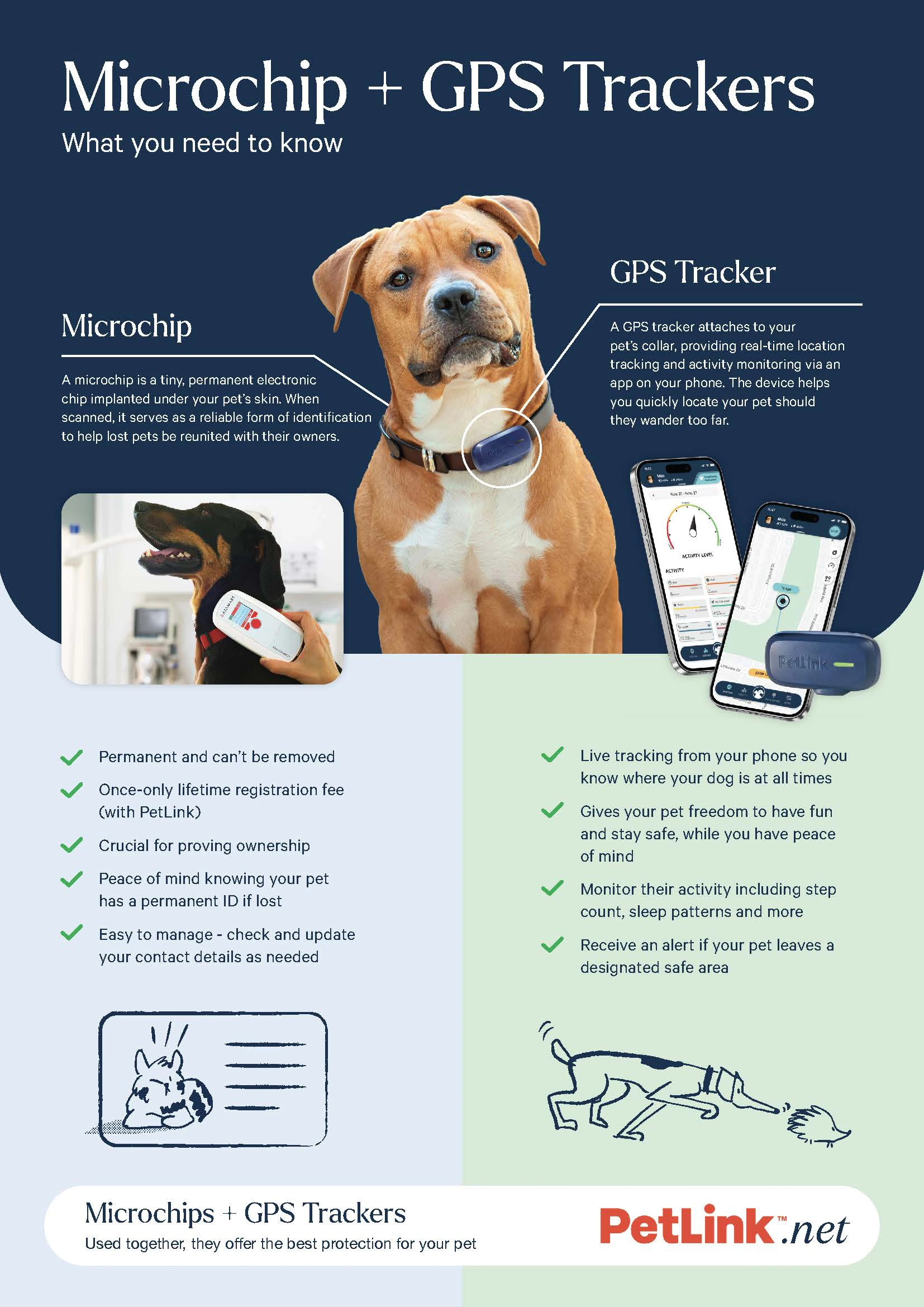
| Microchip | No | N/A | No | Permanent ID |
| ID Tag | No | N/A | No | Basic info |
A GPS tracker is the only tool that shows you where your dog is right now. Microchips and ID tags help people contact you if they find your dog, but do not help you search.
How To Choose The Right Dog Gps Tracker
Choosing a GPS tracker can be confusing. Here’s what really matters:
- Size and weight: Small dogs need a lightweight tracker. Big dogs can wear larger models.
- Battery life: Longer is better, but real-time tracking uses more power.
- Range: If you travel or hike, pick a model with wide coverage.
- Subscription fees: Check the cost before you buy.
- Water resistance: Dogs get wet. Make sure the device can handle rain and swimming.
- App quality: A good app is easy to use and shows clear maps.
- Durability: Look for a strong case that can survive bumps and bites.
- Customer support: Good help can solve problems quickly.
A beginner mistake is buying the cheapest model without checking these points. Always match the tracker to your dog’s needs and your lifestyle.
Key Insights Most Owners Miss
- GPS trackers need time to get a signal if you move to a new place. Wait a few minutes after turning it on.
- Tall buildings and thick forests can block GPS. This is called “urban canyon” or “multipath error.” If your dog is lost in such an area, try to move to a more open space for a better signal.
- Always test the app and the tracker before you trust them. Practice finding your dog using the tracker in a safe area.
- Some trackers let you share your dog’s location with a family member or friend. This is useful if more than one person helps with walks or searches.
The Future Of Dog Gps Trackers
Technology is moving fast. Newer GPS trackers are getting smaller, smarter, and more powerful. Here are a few trends to watch:
- Longer battery life with better power-saving chips.
- More sensors for health, like heart rate or temperature.
- Smart collars that combine tracking, training, and health in one device.
- Satellite texting in areas with no mobile signal (coming soon in high-end models).
- Integration with home automation (for example, opening a dog door when your dog arrives).
As the technology improves, GPS trackers will become even more helpful for dog owners.
When Dog Gps Trackers May Not Work Well
While GPS trackers are reliable most of the time, there are situations where they may not work as expected:
- Underground: GPS cannot work if your dog is in a basement, tunnel, or underground parking.
- Dense cities: Tall buildings can reflect GPS signals and cause confusion.
- No cellular coverage: Cellular-based trackers cannot send data if there is no mobile signal.
- Battery dead: If the battery runs out, the tracker stops working.
Always have a backup plan, such as a microchip and ID tag.
Maintenance And Care Tips
To keep your dog’s GPS tracker working well:
- Clean it regularly, especially if your dog swims or rolls in mud.
- Check the battery level before long walks or trips.
- Inspect the attachment to make sure it is secure.
- Update the app and device firmware when new versions are available.
- Store the charger in a safe place.
A little care can add months to the life of your tracker.
Credit: tractive.com
The Real Value Of Dog Gps Trackers
A GPS tracker is more than a piece of technology. For many owners, it is peace of mind. It helps you act fast if your dog is lost. It can even save lives by preventing accidents. While no tracker is perfect, having one is better than searching blindly.
Some people worry about the cost. But compared to the stress and time of searching for a lost dog, a tracker is a wise investment. It is especially valuable for dogs who love to run, explore, or travel.
Frequently Asked Questions
1 How Long Does A Dog Gps Tracker Battery Last?
Battery life varies by model and how you use the tracker. Most GPS + cellular trackers last 1 to 7 days on a full charge, depending on how often they update location. RF trackers can last up to 30 days.
Bluetooth trackers may last months but only work nearby.
2 Can A Gps Tracker Find My Dog If They Are Far Away?
Yes, if you use a GPS tracker with cellular data, you can find your dog almost anywhere there is mobile coverage. RF trackers have a limited range (usually under 3 miles). Bluetooth trackers work only within 100 meters.
3 Do Gps Trackers Work Everywhere?
GPS trackers need a clear view of the sky to connect to satellites. They also need mobile coverage (for cellular models) or to be within range of the receiver (for RF/Bluetooth models). They may not work underground, in tunnels, or in places with heavy signal blocking.
4 Is A Microchip The Same As A Gps Tracker?
No. A microchip is a tiny chip implanted under your dog’s skin. It has your contact information, but no real-time tracking. A GPS tracker shows you your dog’s location live, but needs charging and may have a monthly fee. Both are useful for safety.
5 Where Can I Learn More About Gps Technology?
For a deeper look at how GPS works, visit the Global Positioning System Wikipedia page.
Dog GPS trackers are a smart tool for today’s pet owners. They use advanced technology to solve a very real problem: keeping your dog safe, wherever life takes you. By understanding how they work, you can pick the right tracker and use it with confidence. Your best friend deserves nothing less.