Many dog owners want the best health for their pets, just like for themselves. In recent years, probiotics have become a common supplement in human diets. Now, more people are asking if these “good bacteria” are safe and helpful for dogs too. If you search online or ask your vet, you might get different answers, and the world of pet supplements can seem confusing. But before giving your dog any supplement, safety is the number one concern. Are probiotics a good choice for dogs, or could they cause problems? This article will walk you through what probiotics are, how they work in dogs, their benefits, risks, and how to use them wisely. You’ll get clear, practical advice—so you can make the best choice for your furry friend’s health.
What Are Probiotics?
Probiotics are live microorganisms—mainly bacteria and sometimes yeasts—that can bring health benefits when eaten in the right amounts. In simple words, they are “good” bacteria that help keep the gut healthy. For dogs, probiotics are usually added to food as powders, capsules, chews, or mixed in treats.
The most common types of probiotic bacteria found in dog products include:
- Lactobacillus: Helps break down food and absorb nutrients.
- Bifidobacterium: Supports digestion and the immune system.
- Enterococcus: Can restore natural gut balance after illness.
- Saccharomyces boulardii: A beneficial yeast sometimes used for digestive issues.
Probiotics work by adding more good bacteria to the gut, which can help balance out harmful bacteria. This balance is important for digestion, immunity, and overall health.
How The Dog Gut Microbiome Works
Inside every dog’s digestive tract lives a huge community of microorganisms: bacteria, viruses, fungi, and more. This is called the gut microbiome. It plays a key role in breaking down food, making vitamins, and protecting against harmful germs.
A healthy gut microbiome:
- Helps digest fiber and nutrients
- Produces vitamins like B12 and K
- Trains the immune system to fight disease
- Stops bad bacteria from taking over
But things like stress, antibiotics, a poor diet, or illness can upset this balance. When the gut loses good bacteria, dogs may get diarrhea, allergies, or even skin problems.
Probiotics aim to support this system by adding more friendly bacteria—helping the gut work better and recover after problems.
Are Probiotics Safe For Dogs?
This is the big question for every caring pet owner. The simple answer: For most dogs, probiotics are generally safe. But, there are important details and exceptions you should know before giving them to your pet.
What Makes Probiotics Safe For Most Dogs?
- Species-Specific Strains: Many dog probiotics use bacteria found naturally in canine guts. This lowers the risk of side effects.
- Low Risk of Overdose: Most probiotics are safe even in higher doses, as excess bacteria are usually removed by the body.
- Research Support: Studies have shown that many canine probiotics are safe and can even help with diarrhea, stress, and allergies.
When Probiotics May Not Be Safe
There are some cases where probiotics are not a good idea:
- Dogs with weak immune systems (from illness, cancer, or medication): Probiotics could cause infections in rare cases.
- Puppies under eight weeks: Their immune systems are still developing.
- Dogs with severe pancreatitis or very sick dogs: Probiotics can sometimes make things worse.
Before starting any supplement, it’s always smart to talk to your veterinarian—especially if your dog has health problems.
Potential Risks And Side Effects
Most dogs have no issues with probiotics. But a small number may have mild side effects, such as:
- Gas or bloating
- Loose stools
- Mild stomach upset
These usually go away after a few days. If problems continue or get worse, stop the probiotic and call your vet.
Rarely, dogs may have allergic reactions—signs include itching, swelling, or trouble breathing. This is very uncommon, but if it happens, get emergency help right away.
Benefits Of Probiotics For Dogs
Many owners give probiotics to dogs because they hope for better health. Here’s what science and vets say about the real benefits.
Improved Digestion
Probiotics can help break down food, absorb nutrients, and ease stomach upsets. They are often recommended for:
- Diarrhea: Especially after antibiotics, stress, or diet changes.
- Constipation: Some probiotics soften stools and support regular bowel movements.
- Gas and bloating: Balancing gut bacteria can reduce discomfort.
Stronger Immune System
About 70% of a dog’s immune system is in the gut. Probiotics may boost immune cells and help the body fight off germs, leading to fewer infections and less sickness.
Allergy Relief
Some studies suggest probiotics can help dogs with allergies, especially skin allergies and itching. By calming the immune system, probiotics may lower allergic reactions.
Support During And After Antibiotics
Antibiotics can kill both good and bad bacteria in the gut. Probiotics can help restore balance and prevent diarrhea caused by antibiotics.
Stress And Anxiety
Stress—from travel, boarding, or changes at home—can upset a dog’s stomach. Probiotics may help reduce stress-related diarrhea and keep the gut healthy during tough times.
Healthy Skin And Coat
A balanced gut can also mean fewer skin problems. Some dogs with itchy skin or dull fur improve after taking probiotics.
Managing Chronic Conditions
In dogs with long-term issues like inflammatory bowel disease (IBD), probiotics can sometimes reduce symptoms and improve quality of life. But they are not a cure and should be used along with vet care.
Non-obvious Insight 1
Some probiotic strains help produce short-chain fatty acids in the gut. These acids support gut health, reduce inflammation, and can even help with weight control.
Non-obvious Insight 2
Certain probiotics may help dogs recover faster from parvovirus infection or other severe gut illnesses, although they are not a replacement for medical treatment.
Scientific Evidence: What Do Studies Say?
It’s important to know that not all probiotic claims are backed by strong research. Let’s look at what science has found so far.
- Diarrhea Treatment: Several studies show probiotics can shorten the time dogs have diarrhea, especially after antibiotics or stress.
- IBD and Colitis: Some research found that dogs with IBD improved when given specific probiotic strains, but results vary.
- Immune Health: Studies suggest probiotics can boost certain immune cells and reduce infections, but more research is needed.
- Allergy Relief: Early results are positive, but not all dogs respond the same way.
However, not every probiotic works for every dog, and some studies show no effect at all. The quality of probiotic products also varies a lot.
Here’s a quick look at some research findings:
| Condition | Proven Benefit | Scientific Support |
|---|---|---|
| Acute Diarrhea | Shorter recovery time | Strong (multiple studies) |
| Antibiotic-Associated Diarrhea | Reduced risk & faster recovery | Strong (multiple studies) |
| Chronic GI Disease | Possible symptom relief | Moderate (some studies) |
| Allergies | Possible improvement | Limited (early research) |
| General Health | Unclear | Weak (not enough data) |
Types Of Probiotics For Dogs
Not all probiotics are the same. The type and strain of bacteria matter a lot.
Main Types Used In Dogs
- Lactobacillus acidophilus: Common in many dog supplements; supports digestion and immune health.
- Bifidobacterium animalis: Helps regulate bowel movements and gut balance.
- Enterococcus faecium: Often used in vet-recommended probiotics for diarrhea.
- Saccharomyces boulardii: A yeast that can help with diarrhea and gut inflammation.
Some products use a mix of strains, which may cover more gut problems.
Probiotic Formats
Dog probiotics come in several forms:
- Powders: Easy to mix with food; can be measured for the right dose.
- Capsules: Good for precise dosing; some dogs may not like swallowing them.
- Chews or Treats: Tasty and easy to give, but may have lower bacteria counts.
- Yogurts or Fermented Foods: Some plain yogurts have live cultures, but not all are safe for dogs (watch for added sugar or xylitol).
Comparing Probiotic Formats
Here’s how common forms stack up:
| Type | Pros | Cons |
|---|---|---|
| Powder | Easy to mix; flexible dosing | Some dogs dislike taste |
| Capsule | Accurate dose; less mess | Hard to give to picky dogs |
| Chew/Treat | Tasty; easy to give | Lower bacteria counts; extra calories |
| Yogurt | Natural; some dogs like it | Not all are safe; sugar/xylitol risk |
Choosing A Safe And Effective Probiotic
With so many products, picking the right probiotic can be confusing. Here’s what matters most:
1. Look For Dog-specific Products
Probiotics made for humans may not be safe or useful for dogs. Always choose supplements designed for pets.
2. Check For Live, Active Cultures
The label should list specific bacteria strains and say how many colony forming units (CFUs) are in each dose. Higher numbers are not always better, but a good product will have at least 1 billion CFUs per serving.
3. Third-party Testing
Look for products tested by outside labs for safety and bacteria count. This helps avoid fake or low-quality supplements.
4. Avoid Unnecessary Additives
Choose probiotics with few extra ingredients. Avoid artificial flavors, colors, and sugars.
5. Ask Your Veterinarian
Vets know which brands are safe and effective. They can also help you choose the right probiotic for your dog’s needs.
6. Consider Storage And Expiry
Some probiotics need to be kept cool to stay effective. Check storage instructions and use before the expiry date.
Common Mistakes When Buying
- Choosing human products: Not all human strains work for dogs.
- Ignoring expiry dates: Old probiotics may have dead bacteria.
- Focusing on price only: Cheap products may not work.
- Overlooking dosage: Too little won’t help; too much may cause diarrhea.
How To Give Probiotics To Your Dog
Giving probiotics is usually easy, but doing it right makes a big difference.
Dosage
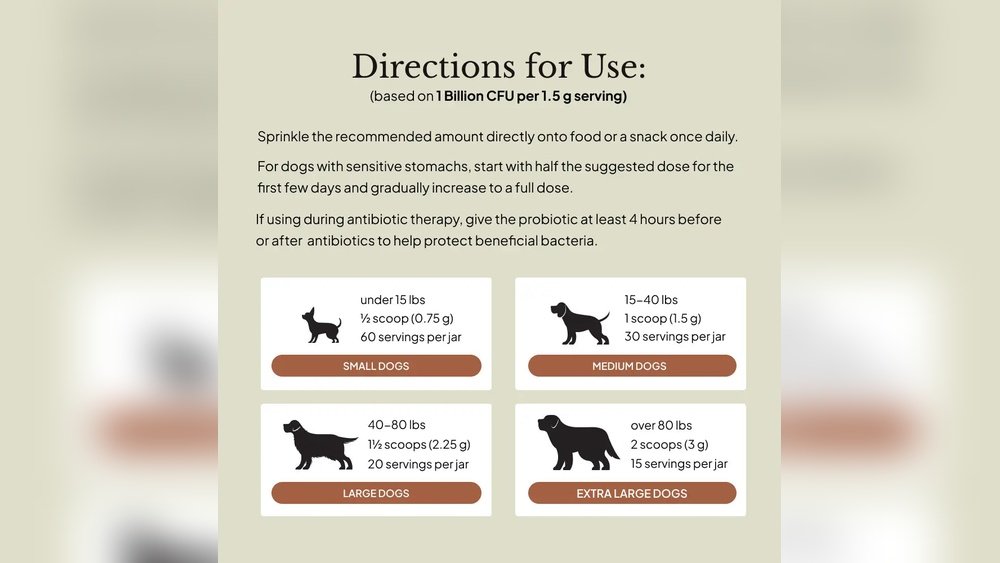
Follow the label or your vet’s advice. Typical doses range from 1 to 5 billion CFUs per day, depending on your dog’s size and health.
Timing
Some probiotics work best on an empty stomach, others with food. Check product instructions.
How To Introduce
- Start with a small amount for a few days.
- Watch for side effects like gas or soft stools.
- Slowly increase to the full dose.
Duration
Some dogs need probiotics only for a few days (like after antibiotics), others may need them long-term (chronic gut issues). Your vet can guide you.
Mixing With Food
Powders and capsules can go in wet food. Chews can be given as treats. If your dog is picky, try hiding capsules in cheese or a treat.

Credit: www.holistapet.com
Who Should Avoid Probiotics?
Most healthy dogs can use probiotics safely, but some should not:
- Very young puppies (under 8 weeks): Their immune systems are not ready.
- Dogs with severe immune problems (cancer, AIDS, on chemotherapy).
- Dogs with pancreatitis or severe digestive disease: Only use under vet care.
- Dogs with known allergies to ingredients in the probiotic.
Always check with your vet if your dog has any health issues.
Probiotics Vs. Prebiotics: What’s The Difference?
You may also hear about prebiotics. These are not bacteria, but types of fiber that feed good bacteria in the gut.
- Probiotics: Live good bacteria.
- Prebiotics: Food for the good bacteria.
Some supplements combine both for better results. For many dogs, adding both can help the gut even more.
Natural Food Sources Of Probiotics For Dogs
Some foods naturally have probiotics, but be careful with these:
- Plain yogurt: Must be unsweetened and xylitol-free.
- Kefir: A fermented milk drink, can offer multiple strains.
- Sauerkraut: Only in tiny amounts and make sure it’s unseasoned.
Most “human” probiotic foods are not made for dogs and may have too much salt, sugar, or unsafe ingredients. Supplements are usually safer and more reliable.
Special Cases: When Probiotics May Be Especially Helpful
After Antibiotics
Antibiotics can wipe out both good and bad bacteria. Probiotics help restore balance and may prevent antibiotic-associated diarrhea.
During Stressful Events
Travel, moving, vet visits, or boarding can upset your dog’s stomach. Starting probiotics a few days before a stressful event may help reduce problems.
Chronic Digestive Problems
Dogs with ongoing diarrhea, gas, or IBD may get relief from certain probiotic strains, but always under a vet’s care.
Older Dogs
Senior dogs often have weaker immune systems and less diverse gut bacteria. Probiotics may help them stay healthier and recover faster from illness.
Rescue Or Shelter Dogs
Dogs coming from shelters may have gut issues from stress, poor diet, or illness. Probiotics can help these dogs adjust and build better health.
Comparing Probiotics With Other Digestive Supplements
Dog owners often ask how probiotics compare with other gut health products, like digestive enzymes or fiber.
| Supplement Type | Main Benefit | When to Use |
|---|---|---|
| Probiotics | Adds good bacteria | After antibiotics, diarrhea, chronic gut issues |
| Prebiotics | Feeds good bacteria | With probiotics for extra benefit |
| Digestive Enzymes | Helps break down food | Dogs with pancreas or absorption issues |
| Fiber Supplements | Improves stool quality | Constipation, loose stool, some gut problems |
The best choice depends on your dog’s specific problem. Sometimes, a combination of these is needed, but always check with your vet.
What To Watch Out For: Quality And Labeling Problems
The pet supplement market is not always well regulated. Some products may:
- Contain fewer live bacteria than claimed
- Use strains not proven to help dogs
- Be contaminated with harmful germs
To avoid problems:
- Buy from well-known brands with third-party testing
- Look for products with clear labeling (strains, CFU count, expiry date)
- Avoid products with lots of fillers or artificial ingredients
A 2011 study found that only 2 out of 13 tested dog probiotics had the bacteria and numbers listed on their labels. This shows the importance of careful shopping.
Credit: vetericyn.com
Signs Probiotics Are Working (or Not Working)
How can you tell if a probiotic is helping your dog? Watch for these signs over 1–4 weeks:
Positive signs:
- Firmer, more regular stools
- Less gas or bloating
- More energy and better appetite
- Improved skin or coat (in some dogs)
- Fewer allergy symptoms
Negative signs or no effect:
- Ongoing diarrhea or stomach upsets
- New signs of illness (vomiting, lethargy)
- Allergic reaction (itching, swelling)
- No change after 4 weeks
If you see negative effects or nothing improves, stop the supplement and talk to your vet. Some dogs need a different strain or a different approach.
Can Dogs Overdose On Probiotics?
One common worry is giving too much probiotic. The good news: probiotic overdose is very rare. If a dog eats too much, the most likely effect is temporary diarrhea or gas. The body usually gets rid of extra bacteria naturally.
But, it’s still best to use the recommended dose. Too high a dose can upset the stomach, especially in small dogs or puppies.
Tips For Safe Use Of Probiotics
- Start slow: Introduce new supplements gradually.
- Check ingredients: Avoid sugar, xylitol, artificial colors.
- Monitor your dog: Watch for changes in poop, appetite, or energy.
- Store properly: Keep probiotics in a cool, dry place (some need refrigeration).
- Use before expiry: Old products may not work.
What Vets Say About Probiotics
Most veterinarians agree that probiotics are safe for healthy dogs and may help certain health issues. However, they warn that not all products are equal, and more research is needed for chronic or serious diseases.
Veterinarians recommend:
- Using products with well-studied strains
- Avoiding human probiotics for dogs
- Not using probiotics as a substitute for medical care
If your dog has ongoing gut or immune problems, always get a professional opinion.
Real-life Examples: When Probiotics Helped
Case 1: A 5-year-old Labrador had frequent diarrhea after every kennel stay. After starting a vet-recommended probiotic, his stools stayed firm, even during stressful periods.
Case 2: An older Shih Tzu with itchy skin and allergies saw less itching and better coat shine after a month on a multi-strain probiotic.
Case 3: A puppy recovering from parvovirus bounced back faster and started eating again after probiotics were added to her recovery plan (with vet guidance).
These stories show that while probiotics are not magic, they can make a real difference for many dogs.
Common Myths About Dog Probiotics
Some misunderstandings can lead to disappointment or even harm.
- Myth: All probiotics are the same.
- Fact: Only certain strains help dogs, and each strain works differently.
- Myth: More CFUs means better results.
- Fact: Quality and the right strain matter more than a big number.
- Myth: Probiotics cure all stomach problems.
- Fact: Some gut issues need medication or special diets.
- Myth: You can share your own probiotic supplement with your dog.
- Fact: Human strains may not help and could even harm dogs.
Regulatory Issues And Product Quality
The US FDA and other agencies do not strictly regulate pet supplements. This means some products may make big claims without proof.
- Look for brands that provide certificates of analysis or have veterinary approval.
- Check for research or clinical trials on the strains used.
- When in doubt, ask your vet or look for products recommended by veterinary groups.
For more details on supplement safety, see the FDA’s official guidance.
When To See A Veterinarian
Even if probiotics are safe, some signs mean your dog needs a vet right away:
- Ongoing vomiting or diarrhea for more than 48 hours
- Blood in stool or vomit
- Lethargy or loss of appetite
- Signs of pain or swelling
Don’t try to treat serious illness with probiotics alone.
Looking To The Future: New Research And Trends
The field of canine probiotics is growing fast. Researchers are now:
- Studying new strains that may target specific diseases
- Testing combinations of probiotics and prebiotics (called “synbiotics”)
- Developing personalized probiotics based on a dog’s unique gut microbiome
In the future, we may see even more precise ways to keep dogs healthy with gut-supporting supplements.
Frequently Asked Questions
Can I Give My Dog Human Probiotics?
It’s best not to give human probiotics to dogs. The bacteria strains may not survive in a dog’s gut, and some ingredients can be harmful. Always use products made for dogs.
How Long Does It Take For Probiotics To Work In Dogs?
Some dogs improve within a few days, especially for mild diarrhea. For allergies or chronic problems, it may take 2–4 weeks. If you see no change after a month, consult your vet.
Are There Any Dogs Who Should Not Take Probiotics?
Yes. Dogs with weak immune systems, very young puppies, or dogs with severe illness should not use probiotics without a vet’s advice.
Can Probiotics Replace Antibiotics Or Other Medicines?
No. Probiotics can help support gut health, but they do not kill harmful bacteria or viruses. Always follow your vet’s treatment plan.
Do Probiotics Help With Bad Breath In Dogs?
Sometimes. If bad breath is caused by gut imbalance, probiotics may help. But dental problems are a more common cause of bad breath, so check your dog’s teeth and gums too.
Caring for your dog’s health means making smart, informed choices. Probiotics are generally safe and can offer real benefits for many dogs, from better digestion to stronger immunity. The most important things are to choose high-quality, dog-specific products, follow dosing advice, and watch your pet for any changes.
Remember, probiotics are not a cure-all, and not every dog needs them. If your dog has ongoing health issues or you’re unsure, your veterinarian is your best resource. With the right approach, probiotics can be a simple way to support your dog’s gut health and overall well-being—helping your loyal companion stay happy and active for years to come.

Credit: www.amazon.com